If you picture downtown Manhattan as a place that shuts down after business hours, it may be time for a fresh look. Lower Manhattan has grown into a full-time residential district, with the resident population rising from 14,000 in 1995 to 70,000 today, according to the Downtown Alliance. If you are weighing luxury condo living in SoHo, Tribeca, or the Financial District, understanding how each area differs can help you choose with more clarity. Let’s dive in.
Downtown Living Has Changed
Lower Manhattan is no longer defined only by office towers and weekday foot traffic. The area now serves residents, workers, and visitors, with access supported by 13 subway lines and 17 commuter ferry routes.
That shift matters if you want convenience without giving up neighborhood character. It also helps explain why today’s downtown condo market feels broader and more layered than many buyers expect.
SoHo Still Leads With Loft Character
SoHo’s identity begins with its cast-iron architecture and historic store-and-loft buildings. Landmarks Preservation Commission reports describe many buildings in the district as dating to the post-Civil War era, built for wholesale dry-goods merchants and manufacturing uses, with later loft and warehouse structures added in the early 20th century.
For you as a buyer, that history shows up in the housing stock. SoHo often appeals to people who want authentic loft proportions, distinctive architecture, and a setting shaped by historic streetscapes rather than a fully uniform condo environment.
What SoHo Feels Like Today
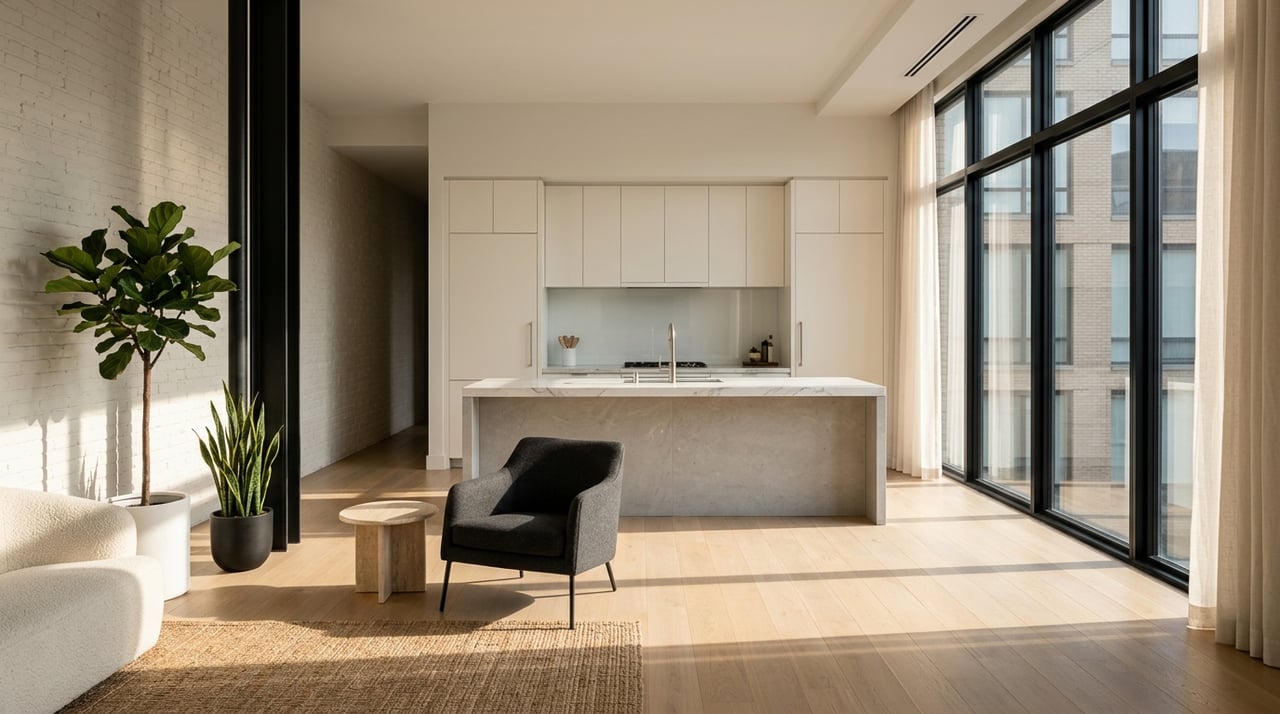
In practical terms, SoHo can offer a mix of older loft residences, converted commercial spaces, and select newer residential options. The result is a neighborhood where luxury often comes from scale, detail, and rarity, not just from a long amenity list.
That makes SoHo especially compelling if your priorities start with architecture and atmosphere. If convenience and services matter too, you will likely compare newer or more updated properties carefully against landmark loft inventory.
Landmark Rules Matter in SoHo
Many SoHo properties sit within landmarked areas or involve designated buildings. According to the Landmarks Preservation Commission, changes to designated buildings or resources in a historic district require review before work begins.
That can be a real benefit if you value protected streetscapes and visual continuity. At the same time, it adds an extra regulatory layer that you should understand before buying a property where future alterations may matter to you.
Tribeca Offers Space and Range
Tribeca shares downtown’s industrial roots, but its building mix is broader. Landmarks Preservation Commission reports describe the area as including warehouses, store-and-loft buildings, stables, garages, freight terminals, converted dwellings, factories, and later office buildings.
For buyers, that translates into variety. Tribeca often presents larger floor plates and a wider range of converted industrial structures than SoHo, which can be appealing if you want more space without leaving the downtown core.
Why Tribeca Often Feels Like a Middle Ground
Tribeca is often the neighborhood buyers consider when they want a balance between loft character and modern luxury. It tends to feel quieter than SoHo while still offering architecture rooted in the same industrial era.
It also includes high-end new development that expands the choice set. At 56 Leonard, for example, amenity spaces include a library lounge, indoor and outdoor theater, infinity-edge lap pool, hot tub, fitness center, yoga studio, and conference center.
FiDi Tells the New Downtown Story
If SoHo reflects historic loft living and Tribeca offers breadth, the Financial District shows the clearest transformation into modern residential downtown living. The Downtown Alliance describes Lower Manhattan as having evolved from a largely business-only Wall Street environment into a round-the-clock district with more residents, restaurants, parks, and retailers.
That change is visible in the housing itself. Older office buildings have been reworked into residential properties, while newer towers add another layer to the skyline.
Full-Service Condo Living Stands Out
The Financial District tends to present the strongest full-service condo story in this downtown cluster. One Wall Street describes itself as the transformation of an Art Deco building, while 25 Park Row presents a contemporary condominium facing City Hall Park.
For you, this can mean a more service-oriented ownership experience. If you want a polished arrival, staffed building operations, and a broader amenity package, FiDi may deserve close attention.
What Luxury Buyers Compare Most
When buyers look across SoHo, Tribeca, and FiDi, the comparison is rarely just about square footage or price. It usually comes down to what kind of downtown lifestyle you want and how much importance you place on history, services, privacy, and convenience.
A useful way to think about it is as a spectrum. SoHo leans most heavily on landmark loft character, Tribeca offers the broadest mix of warehouse conversions and newer towers, and FiDi delivers the clearest office-to-residential and full-service condo experience.
Key Differences at a Glance
| Neighborhood | Often Appeals To Buyers Seeking | Common Housing Character |
|---|---|---|
| SoHo | Historic loft atmosphere and cast-iron architecture | Store-and-loft buildings, loft conversions, select newer residences |
| Tribeca | More space and a wider range of building types | Warehouses, loft buildings, conversions, luxury towers |
| FiDi | Full-service condo living and newer residential transformation | Office conversions, Art Deco redevelopments, new towers |
Amenity Trends in Downtown Luxury Condos
Higher-end downtown condos now compete on more than finishes and views. Amenity design has become a major part of the value proposition, especially in newer buildings and major conversions.
Across representative properties in Tribeca and FiDi, several patterns stand out. These trends can help you separate what is essential from what is simply attractive on paper.
Hotel-Style Service
Some luxury downtown buildings now emphasize staffing and oversight that feel closer to hospitality. One Wall Street highlights doorman service, full-time concierge support, resident-manager presence, porter support, and virtual concierge assistance.
If white-glove service matters to you, this is a meaningful distinction. It can shape day-to-day ownership as much as the residence itself.
Wellness-Focused Amenities
Pools, fitness spaces, yoga rooms, and spa-oriented features have become central in many high-end buildings. 56 Leonard, 565 Broome, and 25 Park Row all place wellness amenities near the center of their offering.
That trend reflects how buyers increasingly expect their building to support daily routine, not just occasional entertaining. For many owners, convenience inside the building carries real value.
Work and Social Space
Luxury condo amenities now often extend into work and gathering spaces. One Wall Street includes private dining, a demonstration kitchen, co-work space, podcasting studios, and access to a large fitness club, while 25 Park Row adds a library, screening room, lounge, billiards room, dining room, playroom, golf simulator, and yoga studio.
If you spend meaningful time in the city, these shared spaces can affect how fully a building functions for your lifestyle. They also help explain why two buildings with similar finishes may feel very different in use.
Outdoor Space and Arrival Experience
Outdoor areas remain a premium feature downtown. 25 Park Row includes a garden and dining terrace, 56 Leonard offers private outdoor spaces and a sundeck, and 565 Broome features landscaped outdoor areas along with private terraces and pools on select penthouse units.
Private arrival also still matters. 565 Broome advertises a gated driveway and automated parking, while 25 Park Row includes on-site parking and a separate entrance on Theater Alley.
The Practical Side of Buying Downtown
Luxury purchases are personal, but the practical details still matter. Downtown Manhattan offers strong access, a broad housing mix, and a resident base that has grown significantly over time, but each building and neighborhood comes with tradeoffs.
The key is to match the property to your priorities rather than chase a label alone. “Downtown luxury” can mean very different things from one block to the next.
Access Is a Major Advantage
Lower Manhattan’s appeal includes density of access to transit and nearby destinations. The Downtown Alliance describes the district as a thriving business, visitor, and residential community, while nearby destinations in the area include City Hall Park, the Oculus, Brookfield Place, the Seaport District, the waterfront, and the Perelman Performing Arts Center.
If you want a home that supports both city movement and lifestyle convenience, that accessibility is a real strength. It helps make downtown living workable beyond the office day.
Historic Review Can Affect Ownership
If you are focused on SoHo or other designated historic areas, you should understand the review process tied to landmark status. The Landmarks Preservation Commission notes that alterations, reconstruction, demolition, or new construction affecting designated buildings require Commission approval.
That does not make landmarked ownership less attractive. It simply means your decision should account for both the benefits of preservation and the practical limits on change.
Resident Growth Is a Useful Signal
From a broader market perspective, the increase in Lower Manhattan’s resident base from 14,000 to 70,000 since 1995 suggests a much deeper year-round residential market than the area had decades ago. While that does not guarantee future pricing or resale timing, it does point to sustained demand for living downtown.
For a buyer evaluating long-term fit, that context matters. It supports the idea that downtown is not a niche residential story anymore, but a mature one.
Choosing the Right Downtown Fit
If your priority is authentic loft character and protected historic context, SoHo may feel like the strongest fit. If you want more space and a broader mix of industrial conversions and newer luxury towers, Tribeca often stands out.
If your ideal is a highly serviced condo experience in a neighborhood defined by adaptive reuse and modern residential growth, the Financial District may be the better match. The right choice depends less on headlines and more on how you want to live day to day.
For buyers considering Manhattan luxury condos, a clear strategy matters. With deep New York experience and a refined, high-touch approach, Edward Pitlake can help you evaluate downtown options with discretion, precision, and market context.
FAQs
What makes SoHo luxury condos different from Financial District condos in Manhattan?
- SoHo is often defined by cast-iron loft character and historic buildings, while the Financial District is more closely associated with office-to-residential conversions, newer towers, and full-service condo living.
What should buyers know about landmark rules in SoHo, Manhattan?
- In designated buildings or historic districts, the Landmarks Preservation Commission must review certain alterations, reconstruction, demolition, or new construction before work begins.
Why do many buyers compare Tribeca and SoHo luxury condos?
- Buyers often compare them because both areas have industrial and loft roots, but Tribeca generally offers a broader building mix and often larger floor plates.
What amenities are common in luxury downtown Manhattan condos?
- Common features in higher-end downtown condos include concierge or doorman service, wellness spaces, pools, fitness centers, social lounges, work areas, and premium outdoor space.
Is Lower Manhattan a strong residential area for condo buyers today?
- Lower Manhattan has grown into a full-time residential district with a resident population that increased from 14,000 in 1995 to 70,000 today, supported by extensive transit access and a broader mix of amenities and destinations.